Most leaders have a vision for their company. It lives somewhere in their head, partially formed, occasionally referenced in a meeting or a speech. But here is the problem: if your team cannot see the vision, they cannot chase it. And if they cannot chase it, they will fill the gap with their own assumptions about where the company is headed.
That is how misalignment happens. Not from bad intentions, but from a lack of clarity.
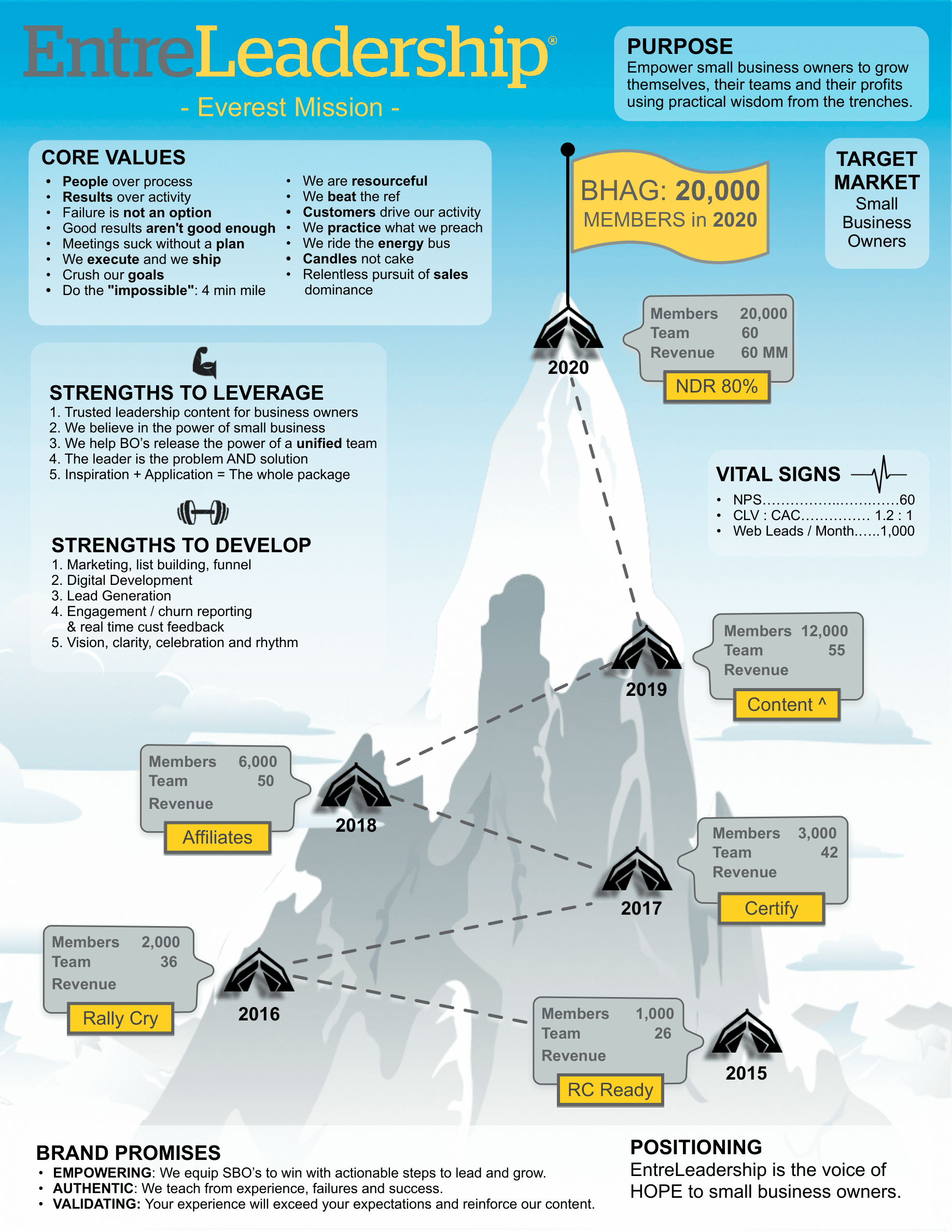
The Everest Mission solves this by turning your vision into something tangible: a single visual document that your entire team can rally around. I put this one together in 2015 when I was leading EntreLeadership at Ramsey Solutions. I learned the concept from a friend and influential CEO, Clate Mask, and immediately knew it was the missing piece for our team.
Why Vision Has to Be Visual
Words matter. But words alone are not sticky enough. When you tell someone your five-year goal in a meeting, they nod, they agree, and by Thursday they have forgotten the number. Written goals in a document get buried. Slide decks get archived.
A visual changes everything. When your team can literally see the mountain they are climbing, the camps along the way, and the summit they are aiming for, something shifts. The vision stops being abstract and starts becoming real. It gives people a reference point. Something they can point to when they need to make a decision, prioritize their time, or push through a hard quarter.
The best visions are not just communicated. They are displayed.
What Makes It Stick
A compelling vision document does three things:
- It simplifies. Your entire strategic picture fits on one page. Purpose, values, market, strengths, milestones, and the big goal. If it takes a meeting to explain, it is too complicated.
- It creates a timeline. Each camp on the mountain represents a stage of growth with specific, measurable targets. Your team knows where they are today and what the next milestone looks like. That makes the work feel achievable instead of overwhelming.
- It builds identity. Core values, brand promises, and positioning are baked in. This is not just a financial roadmap. It is a declaration of who you are, what you stand for, and why the journey matters.
Put It to Work
The power of the Everest Mission is not in the document itself. It is in how you use it. Print it. Frame it. Put it on the wall where your team walks by every day. Reference it in meetings. Point to the current camp and ask, “Are we on track?” Celebrate when you reach a milestone. Let it become part of the language of your organization.
When a new hire joins, walk them through the mountain. When you are making a tough strategic decision, hold it up against the summit. When the team is grinding through a hard season, remind them how far they have already climbed.
Vision is not a one-time speech. It is a daily practice. And the leaders who make their vision impossible to ignore are the ones whose teams actually get there.