One of the fastest ways to become a better leader is to stop assuming everyone thinks and works the way you do. They don't. And that is not a problem to fix. It is an advantage to leverage.
The Myers-Briggs Type Indicator (MBTI) is one of the most widely used personality frameworks in the world. It breaks personality into four dimensions, each with two preferences, giving you a simple language for understanding how people are wired differently.
Why It Matters for Leaders
When you understand personality types, you stop being frustrated by the people who are different from you and start being effective with them. The team member who needs time to process before responding is not slow. They are an introvert who thinks before they speak. The person who keeps asking “what about this scenario” is not being difficult. They are an intuitive who naturally sees possibilities and edge cases.
Understanding these preferences changes how you communicate, delegate, run meetings, give feedback, and resolve conflict. It does not put people in boxes. It gives you a map so you can meet them where they are.
The Four Dimensions
Energy: Extrovert (E) vs. Introvert (I)
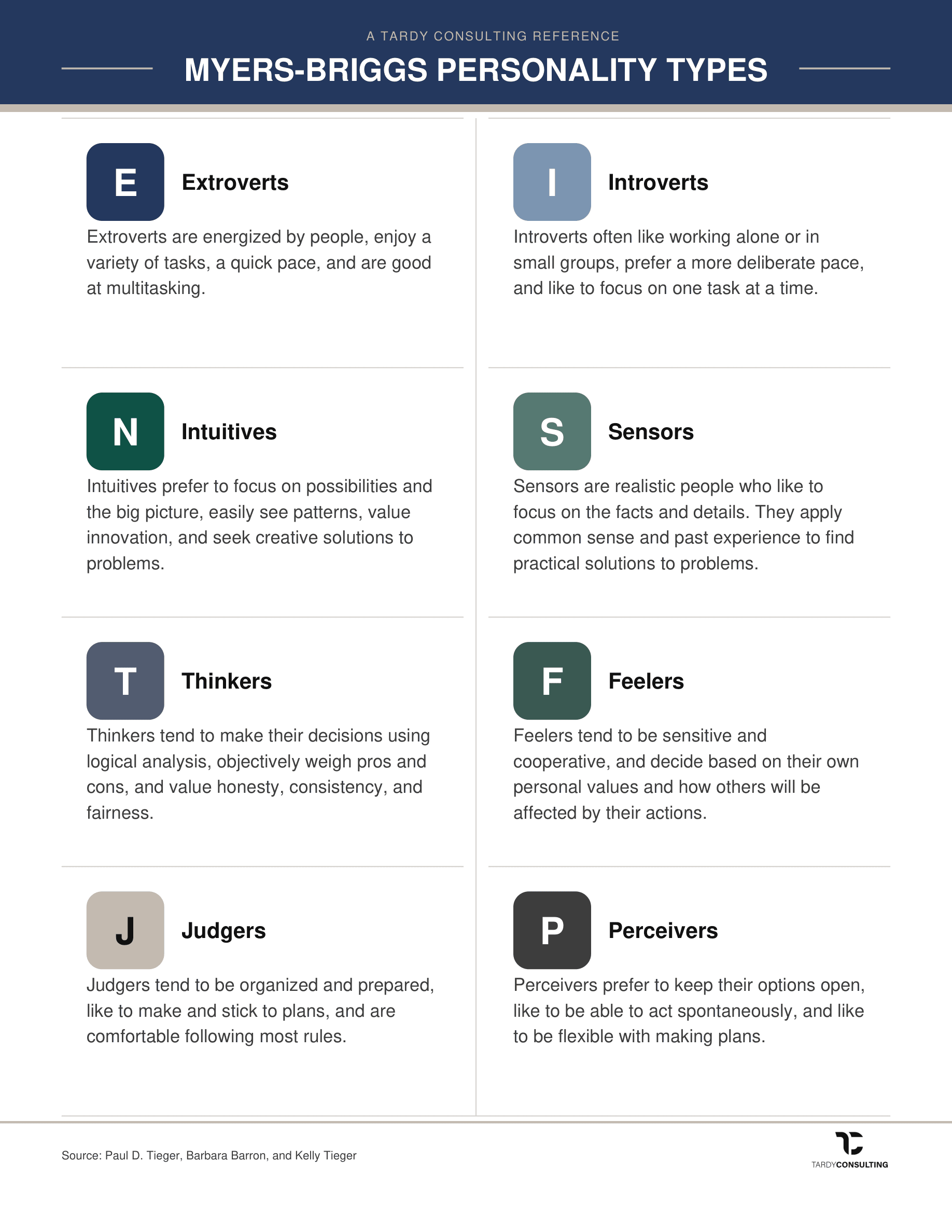
Where do they get their energy? Extroverts recharge around people and thrive on variety and pace. Introverts recharge alone and prefer depth over breadth. This affects everything from how you structure one-on-ones to whether someone thrives in an open office or needs quiet space to do their best work.
Information: Intuitive (N) vs. Sensor (S)
How do they take in information? Intuitives focus on the big picture, patterns, and possibilities. Sensors focus on facts, details, and what is real and proven. When these two types talk past each other in a meeting, it is usually because one is painting the vision while the other wants the data. Both are valuable. The leader's job is to make room for both.
Decisions: Thinker (T) vs. Feeler (F)
How do they make decisions? Thinkers lean on logic, consistency, and objectivity. Feelers weigh personal values and how decisions affect people. Neither approach is better. The best decisions usually involve both lenses. A leader who only thinks will miss the human cost. A leader who only feels will avoid hard calls.
Structure: Judger (J) vs. Perceiver (P)
How do they organize their world? Judgers want plans, structure, and closure. Perceivers want flexibility, options, and spontaneity. This plays out in project management, deadlines, and how your team handles change. Knowing this about your people helps you set them up to succeed instead of fighting against their wiring.
How to Use This
Start by learning your own type. Then get curious about the people on your team. You do not need to formally test everyone. Just start paying attention. Notice who talks to think versus who thinks to talk. Notice who wants the plan locked down and who wants to keep options open. Notice who leads with logic and who leads with empathy.
The reference card above is designed to be printed and kept handy. Use it as a conversation starter with your team or as a quick reminder before a difficult conversation. The goal is not to label anyone. It is to understand them well enough to bring out their best.
Source: Paul D. Tieger, Barbara Barron, and Kelly Tieger. Presented for educational use.