Marketing Framework
The StoryBrand
Framework
The 7-part framework that makes marketing easy. Clarify your message so customers will listen.
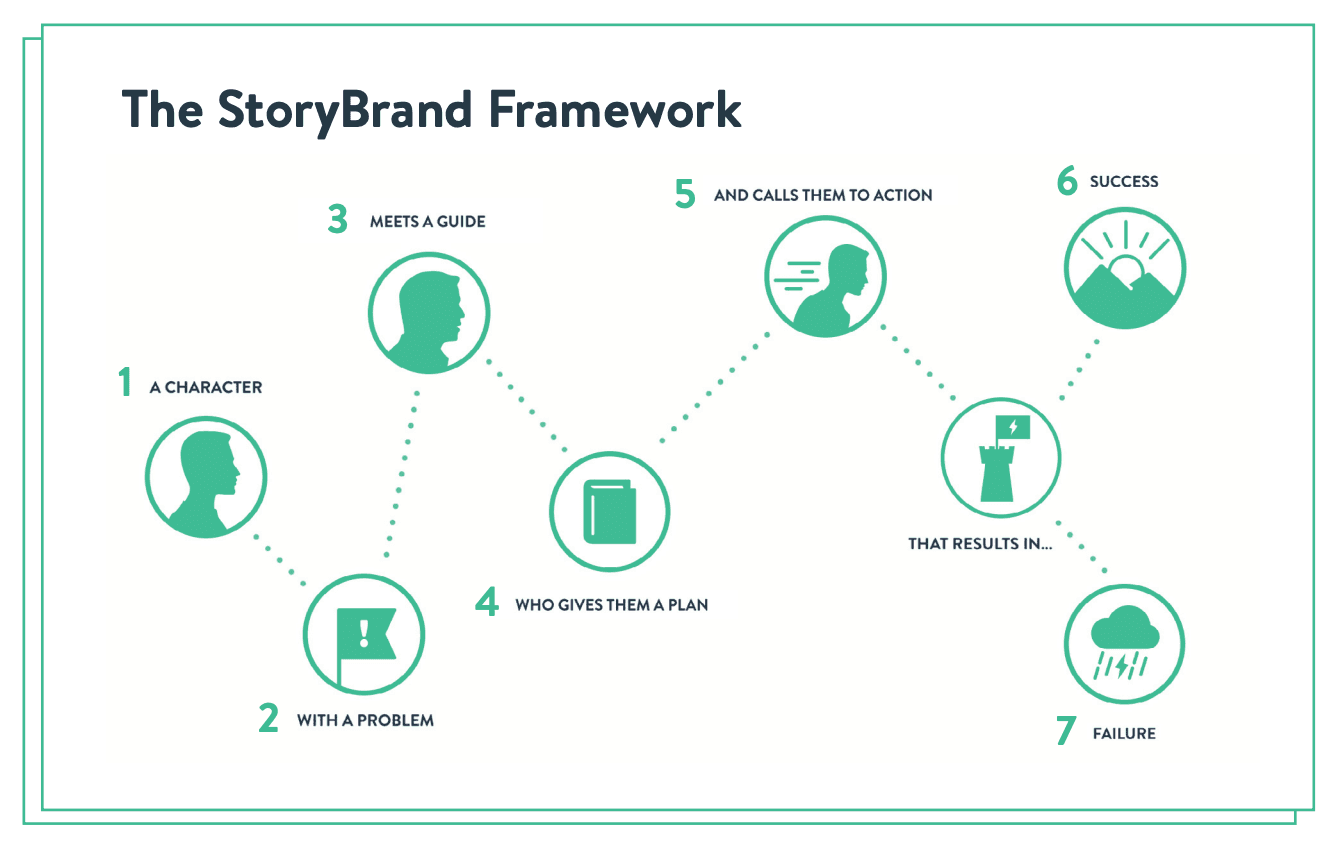
Stories are humanity's most powerful tool for capturing attention. Donald Miller developed the StoryBrand Framework to help businesses apply the same narrative structure used in great movies and books to their brand messaging. When you clarify your message, customers listen.
Part 1
A Character
“Your customer is the hero, not your brand.”
Every great story starts with a character who wants something. Your customer needs to know within seconds what you offer and how it relates to their desire. Most businesses fail because they try to be too many things. You have to be known for something, preferably one thing.
Ask yourself: What does your customer want as it relates to your brand?
Part 2
Has a Problem
“Customers come to you because they have a problem to solve.”
People mentally file your business under the problem you solve. If you haven't clearly defined that problem, your messaging won't stick. The problem is the hook that pulls people into the story. Without it, there's no reason for them to pay attention.
Ask yourself: Have you clearly defined the problem your brand addresses?
Part 3
And Meets a Guide
“Position yourself as the guide, not the hero.”
This is the critical shift most businesses miss. Customers aren't looking for another hero. They're looking for a guide. Think Yoda, not Luke Skywalker. Think Gandalf, not Frodo. Your job is to show empathy for their problem and demonstrate authority to solve it. Present what you offer as a tool to help them win.
Ask yourself: Are you positioning yourself as the guide in your customer's story?
Part 4
Who Gives Them a Plan
“Reduce confusion with a clear, simple plan.”
Once you've established yourself as the guide, give your customer a simple plan. Three to four steps that show them exactly how working with you leads to success. A clear plan reduces the perceived risk of doing business with you and makes the next step feel easy.
Ask yourself: Do you have a straightforward plan that makes doing business with you accessible?
Part 5
And Calls Them to Action
“If you don't ask, they won't act.”
Customers don't take action unless they are challenged to take action. Your call to action needs to be obvious and direct. A clear button. A bold invitation. Don't bury it in a crowded navigation menu or hope people figure it out. Tell them exactly what to do next.
Ask yourself: Do you have a clear, direct call to action?
Part 6
That Helps Them Avoid Failure
“Show what's at stake if they don't act.”
Stories only work when something is at stake. If there's no consequence for inaction, there's no urgency. Help your customer understand what they stand to lose by not engaging with you. This isn't about fear. It's about painting an honest picture of what happens when the problem goes unsolved.
Ask yourself: Have you communicated what's at stake for your customers?
Part 7
And Ends in Success
“Paint a picture of what life looks like after.”
The best brands help their customers envision life after the problem is solved. Show the transformation. Booking.com doesn't just sell hotel rooms. They show vacationers relaxing on beaches, exploring cities, and making memories. Help people see the finish line and they'll start running toward it.
Ask yourself: How can you help your customers envision success after engaging with you?
Clear messaging is a competitive advantage. When you confuse, you lose. When you clarify, you win.
If you're ready to clarify your message, start by writing your BrandScript.
Based on the work of Donald Miller and the StoryBrand Framework. Adapted with credit for educational use.